John–Tomakin Father-Son Relationship
Brave New WorldJohn–Tomakin Father-Son Relationship is the biological bond between John and the Director of Hatcheries and Conditioning, exposed when Linda names the Director as the man who made her pregnant and John publicly calls him his father. Its disclosure transforms a private history into a public crisis: the World State’s rejection of parenthood makes the relationship a source of scandal, while the Director’s role in managing artificial reproduction sharpens the irony of his own unplanned fatherhood.
Background and Biological Connection
John’s birth stands outside the World State’s prescribed reproductive order. The society’s standard is “One egg, one embryo, one adult-normality,” but its laboratories also multiply embryos on a scale designed to produce standardized people in batches. Bokanovsky’s Process can turn a single egg into as many as ninety-six embryos, and the Director explains that it serves social stability by producing uniform groups suited to collective work.
The Director’s institution does not simply reproduce bodies; it manages their development and social destination. Embryos are monitored and treated in bottles, tested for sex, and classified; most female embryos are made sterile, while a limited proportion develop normally. Against this system of deliberate control, John’s existence as Linda’s child is an unplanned result of the Director’s earlier relationship with her. The contrast makes their kinship more than a personal secret: it exposes a gap between the society’s claims to command reproduction and the lives its rules cannot fully contain.
Exposure in the Fertilizing Room
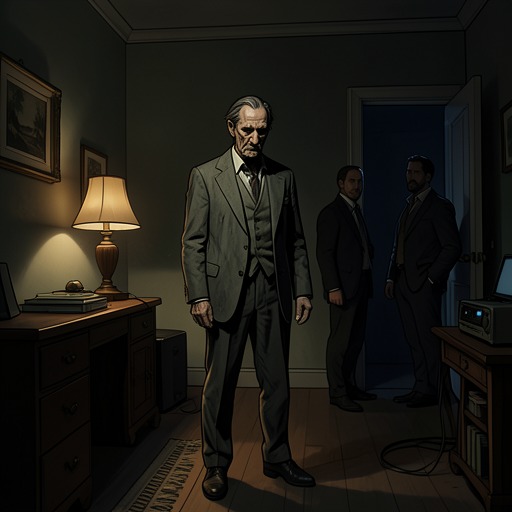
The relationship becomes known in the Fertilizing Room, where the Director has brought John and Linda before the workers. Linda clings to him and insists that she is Linda, then tells him that he made her have a baby. Her explanation also makes clear that she had followed her contraceptive drill and did not understand how the pregnancy had occurred. The disclosure abruptly changes the room’s atmosphere: laughter gives way to an uncomfortable silence as the workers confront the fact of a mother and child.
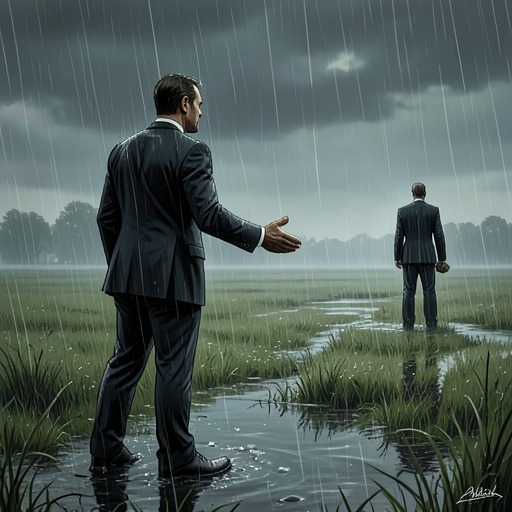
John enters, crosses the room, kneels before the Director, and addresses him as his father. The gesture makes the hidden relationship unmistakable, but the word does not prompt recognition or reconciliation. Instead, it releases the audience’s laughter, because fatherhood is treated as a gross violation of social propriety. The Director, pale and humiliated, covers his ears and rushes out; the exposure ends his public standing as Director, and he resigns immediately afterward.
Public Consequences and Irony
The revelation has sharply unequal consequences for the people involved. The Director’s career and public authority collapse, while Linda is rejected as an object of public interest because motherhood is considered obscene and her appearance is mocked. John, by contrast, becomes an object of fascination for upper-caste London: the same relationship that discredits the Director turns John into a spectacle.
That reversal underscores the society’s selective treatment of family ties. The Director’s fatherhood is intolerable not because the World State questions his authority over reproduction, but because an actual mother and son make visible what its vocabulary and institutions suppress. John’s direct address exposes the biological bond in a society that has replaced ordinary kinship with laboratory production and social conditioning.
Significance of the Relationship
The father-son bond also connects the personal revelation to the World State’s broader reproductive system. The Director can explain how eggs are multiplied, embryos conditioned, and populations stabilized; yet he cannot control the meaning or consequences of his own past relationship with Linda. Later, John questions the logic of producing different castes when the state can obtain people from bottles, prompting Mustapha Mond to argue that a society composed entirely of Alphas would become unstable and miserable. The exchange places John’s family history beside the state’s defense of engineered social difference.
The relationship therefore operates as both a biological fact and a public contradiction. John’s call to the Director names a kinship that the surrounding culture can only turn into scandal and spectacle. Rather than bringing father and son together, the revelation destroys the Director’s position and leaves the incompatibility between human parenthood and the World State’s social order exposed.